Tools that work off the network.
Software, manuals and hardware designs for people who build
their own things — radios, aircraft trackers, mesh nodes, robots. Made for
the field, where there is no internet and no second chance to download
something you forgot.
No accounts. No subscriptions. Nothing
phones home.
Offline utilities for Linux
ADS-B aircraft radar, Meshtastic, FM radio, CAN bus, offline navigation. Native, no browser, no account.
The build, written down properly
Hard-won notes from actual builds — including the wrong turns, which is the part that costs you a weekend.
Hardware you can print
Robot and enclosure designs, printable and documented, with the reasoning behind the dimensions.
uc-adsb
A native ADS-B tracker that plots live aircraft on a real offline map and identifies every one of them without touching the internet. No browser, no map tiles, no lookups.
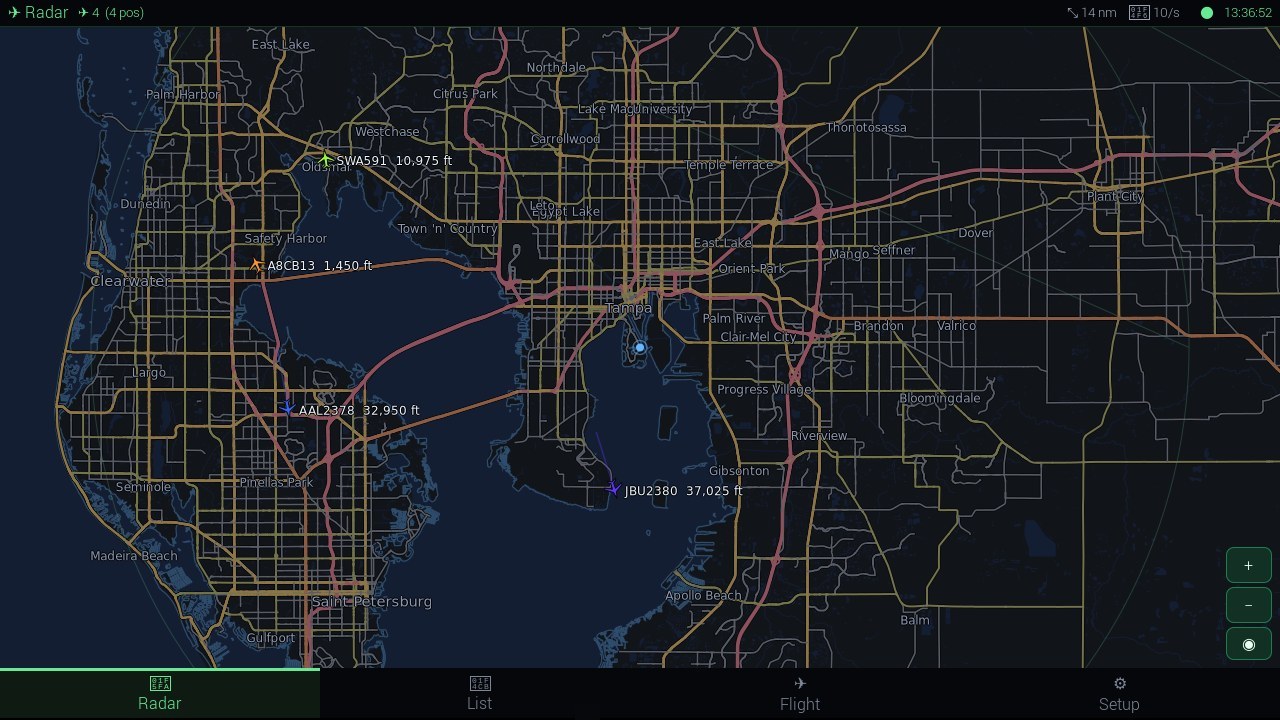
563,000 airframes, on disk
Every hex code is resolved locally to registration, type and description. Web trackers ask a server. This one asks a file.
No browser in the loop
GTK and Cairo, drawing directly. It starts in a second and runs comfortably on a Raspberry Pi.
Your decoder stays in the attic
Point it at any readsb or tar1090 box on your network. The antenna goes where the sky is; the screen goes where you are.
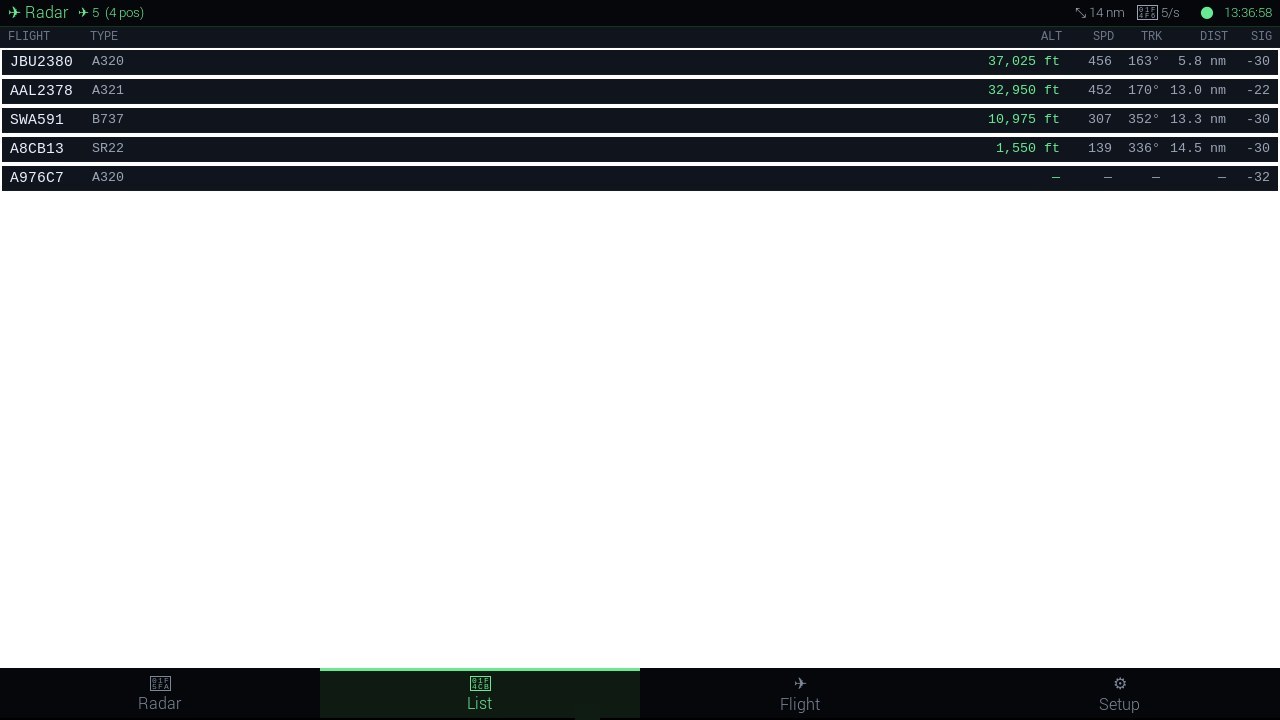
Point it at a receiver
# a decoder on this machine
uc-adsb

# or one anywhere on your network
UC_ADSB_FEED=http://feeder.local/tar1090/data/aircraft.json uc-adsb
What you need
- An ADS-B decoder — readsb or dump1090, local or on your network
- Linux — x86-64 or ARM. Raspberry Pi included
- An RTL-SDR and antenna, if you are decoding locally
The uConsole CM5 Field Manual
Building a ClockworkPi uConsole on a Compute Module 5 — with NVMe, an AIO v2 radio board and Kali. Every trap, with the command that settles it.
Almost everything online targets the CM4
The CM5 has different device-tree names, different serial devices and different GPIO numbering. CM4 instructions fail in ways that look exactly like broken hardware.
The wrong turns, not just the right ones
Anyone can list the commands that worked. What costs you a weekend is the hours spent blaming the wrong component — so each section records the misleading symptom and the observation that settled it.
“A flat battery looks exactly like a dead panel”
Login screen renders, then black. Backlight lit. Machine perfectly healthy over SSH. One command tells you which of the two it is — and four plausible theories are ruled out for you.
Covered
- Boot — EEPROM order, NVMe-only recovery, and the RPIBOOT trap that can take your host machine down with it
- AIO v2 — GPS, LoRa, SDR and RTC brought up, with the CM5 forms that differ from CM4
- Meshtastic — three separate traps, each of which makes a correct config look broken
- Power and panel — the flat-battery/dead-panel chain, DPMS stale arming, and the wifi that drops when the display sleeps
- Antennas and RF noise — what each band actually needs, why cable choice can cost more than the antenna gains, and the carrier the machine radiates into its own receiver at 250.0000 MHz
- Sound and SDR++ — why the hardware was fine and the packaging wasn't
- Reference — a symptom → command → meaning table for the whole machine
Single-purpose utilities
One job each, done properly. Same rules as everything here: native, offline, documented, no account.
uc-mesh
A native GTK client for Meshtastic. Nodes, messages and signal on a real interface instead of a web page.
Buy uc-mesh — $5uc-fm
Broadcast FM on an RTL-SDR, built to be used one-handed like a car radio rather than like a spectrum analyser.
Buy uc-fm — $7uc-can
CAN bus sniffer and decoder for poking at what a vehicle is actually saying on the wire.
Buy uc-can — $9uc-wx
Records weather satellites while they are overhead and decodes the pictures — unattended, because the good passes are at four in the morning. Deletes them again when they stop being news.
Buy uc-wx — $16uc-sat
Satellite tracker and pass predictor that does the arithmetic on your machine, not on a web server. Tells you when to be outside and which way to face, explains what each object actually is — working satellite, spent rocket stage or debris — and with a dongle will go and check whether it is really transmitting.
Buy uc-sat — $12uc-nav
Offline vector maps with address search. No tiles, no data connection, no account — the map is a file on your disk.
Buy uc-nav — $14Each is packaged to the same standard as uc-adsb: install, usage, dependency and data-licence documentation in every download.
Stop reading. Just run it.
Everything the Field Manual documents, applied for you — the AIO radios, Meshtastic's three traps, radio arbitration, display, power, the wifi that drops when the screen sleeps, sound and the trackball.
--dry-run changes nothing
Prints every single change and touches nothing, so you read it before it runs. Verified, not asserted.
Backs up before it edits
Every file is copied before it is touched, once. uninstall.sh
genuinely puts it all back.
You keep your own OS
Download your image from wherever you like; this runs on top. So it stays current, and you can read it before running it as root.
Bundles
Three ways in, depending on what you are actually doing.
About
Field Off Grid is the practical skill of working somewhere with no infrastructure. Everything here came out of building things that had to survive that — a robot, a Meshtastic relay, a Linux handheld carried in a bag, an aircraft tracker with no internet.
Nothing here is a wrapper around somebody's API. If it needs data, the data ships with it or there are instructions for building your own. Every download includes install and usage instructions, a full dependency list, and the licence terms for any data it uses — so you know exactly what you have and what you are allowed to do with it.
Questions, bug reports and feature requests are welcome — support@fieldoffgrid.com.